Murders of Walter Elliot and Nina Albrecht
The Brass VerdictThe Murders of Walter Elliot and Nina Albrecht occur just as the prosecution of Walter Elliot is about to end, turning a courtroom crisis into a second, unresolved killing. Harry Bosch reports that the pair were shot after dinner at Elliot’s Beverly Hills home; later evidence separates their deaths from David McSweeney’s attack on Mickey Haller and points to Johan Rilz’s family as responsible. The identity of the killer remains unestablished, but the weapon’s German manufacture gives the murders the character of a message as well as a crime.
Causes and Background
The killings follow a chain of events in which Elliot’s murder trial is collapsing and the jury-tampering scheme surrounding it is coming under federal scrutiny. Bosch calls Haller late in the evening with news that there is no longer a trial: Elliot and his girlfriend have been killed. Bosch says he received a tip from a friend in the medical examiner’s office and suspected that someone might be trying to clear away people connected to the unfolding case. He therefore called his team back to check on Haller’s location. That warning is not merely an update about Elliot; it places the killings within a night when Bosch believes further violence may follow.
Haller has already been to Elliot’s mansion in Beverly Hills, and the setting makes Bosch’s account immediately recognizable to him. He also believes he knows who the girlfriend is: Nina Albrecht. Haller had connected her to Elliot after Elliot disclosed that he had received help on the day of the earlier murders in Malibu. The detail gives Albrecht a place in the case before her death is confirmed: she is not identified only as Elliot’s companion, but as someone Haller had already associated with the hidden circumstances of the earlier crime.
The Murders
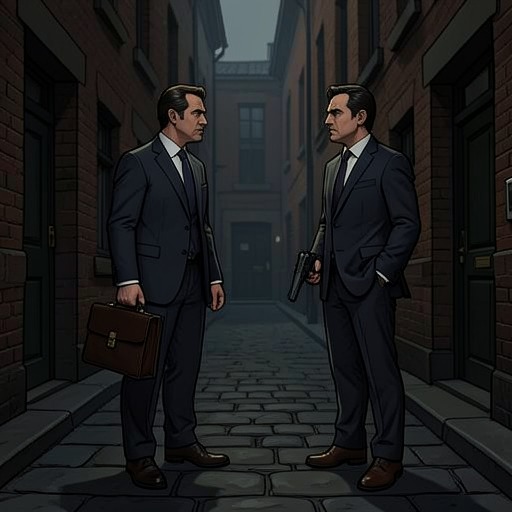
Bosch recounts that Elliot and Albrecht had come home from dinner. Elliot’s electric gate would not open, and when he got out to push it open, an assailant shot him from behind. Albrecht was in the car and was also killed. Bosch’s account is blunt and practical, delivered as an explanation for why Haller’s trial has ended; Haller, by contrast, receives it in shock. The familiar gate and the return from dinner make the news concrete, while the abrupt ending of the trial shows how completely the murder interrupts the legal proceedings.
At first, the killings appear to fit a broader effort to eliminate people connected to the case. Haller later accuses Judge Holder of sending McSweeney after Elliot and Albrecht as part of a cleanup, alongside McSweeney’s attempt on Haller. Haller’s accusation draws on a real connection: his investigator traced McSweeney’s earlier arrests to Mitch Lester, Holder’s husband, and Haller argues that Holder had access to the jury pool and computers, planted a sleeper juror, and used Jerry Vincent to move money. He further alleges that Vincent’s hesitation after the Federal Bureau of Investigation began looking into the scheme led Holder and Lester to send McSweeney against Vincent. These claims explain why Haller initially treats the deaths as part of the same plot, but they do not establish that McSweeney killed Elliot and Albrecht.
The Killer and the Evidence
Bosch later corrects Haller’s assumption. McSweeney did try to kill Haller, but Bosch says that he did not kill Elliot and Albrecht: the weapon used in their deaths did not match, and the killings did not fit the logic of McSweeney’s attack on Haller. Haller is left stunned by the distinction. For three days, he had believed that one man had killed Elliot and Albrecht and then tried to kill him, and that the man was safely in official custody. Bosch’s correction leaves a second killer at large and breaks the apparent unity of the attacks.
Bosch attributes the killings to Johan Rilz’s family. When Haller asks whether Bosch means organized crime, Bosch clarifies that he means Rilz’s family, and says they took care of it. The evidence Bosch describes is ballistic: the bullets recovered from both victims were nine-millimeter Parabellums with brass jackets and casings, manufactured in Germany. The Beverly Hills Police Department compared the bullet profile with a C96 Mauser, also manufactured in Germany. The match supplies a concrete link between the weapon and the murders, but the account does not name the person who fired it or explain precisely how the family carried out the killings.
Consequences and Significance
The German origin of both the ammunition and the weapon shapes the investigators’ interpretation of motive. Bosch says the Beverly Hills Police Department thinks the killings were almost like somebody sending a message; Haller draws out the implication that it is a message from Germany, and Bosch agrees. The evidence supports that reading as an investigative theory, not as a fully explained statement of who ordered the murders or why. The earlier connection between Albrecht, Elliot, and the Malibu killings deepens the stakes, but does not by itself identify the killer.
The deaths also expose the danger of treating several crimes as one continuous conspiracy. A grand jury returns indictments against Holder, Lester, Bruce Carlin, McSweeney, and a jury-office supervisor accused of giving the conspirators access to computers. Bosch says the arrests are to be carried out simultaneously. That case concerns the jury-rigging network and the killing of Vincent; Bosch’s later distinction makes clear that McSweeney’s role in the attack on Haller does not make him responsible for Elliot and Albrecht’s deaths. The two murders therefore close Elliot’s trial while opening another investigative question: who carried out the apparent reprisal linked to Rilz’s family, and what message was meant to reach its recipients?